
Access Restricted for EU Residents
You are attempting to access a website operated by an entity not regulated in the EU. Products and services on this website do not comply with EU laws or ESMA investor-protection standards.
As an EU resident, you cannot proceed to the offshore website.
Please continue on the EU-regulated website to ensure full regulatory protection.
Wednesday Aug 12 2026 02:26

4 min
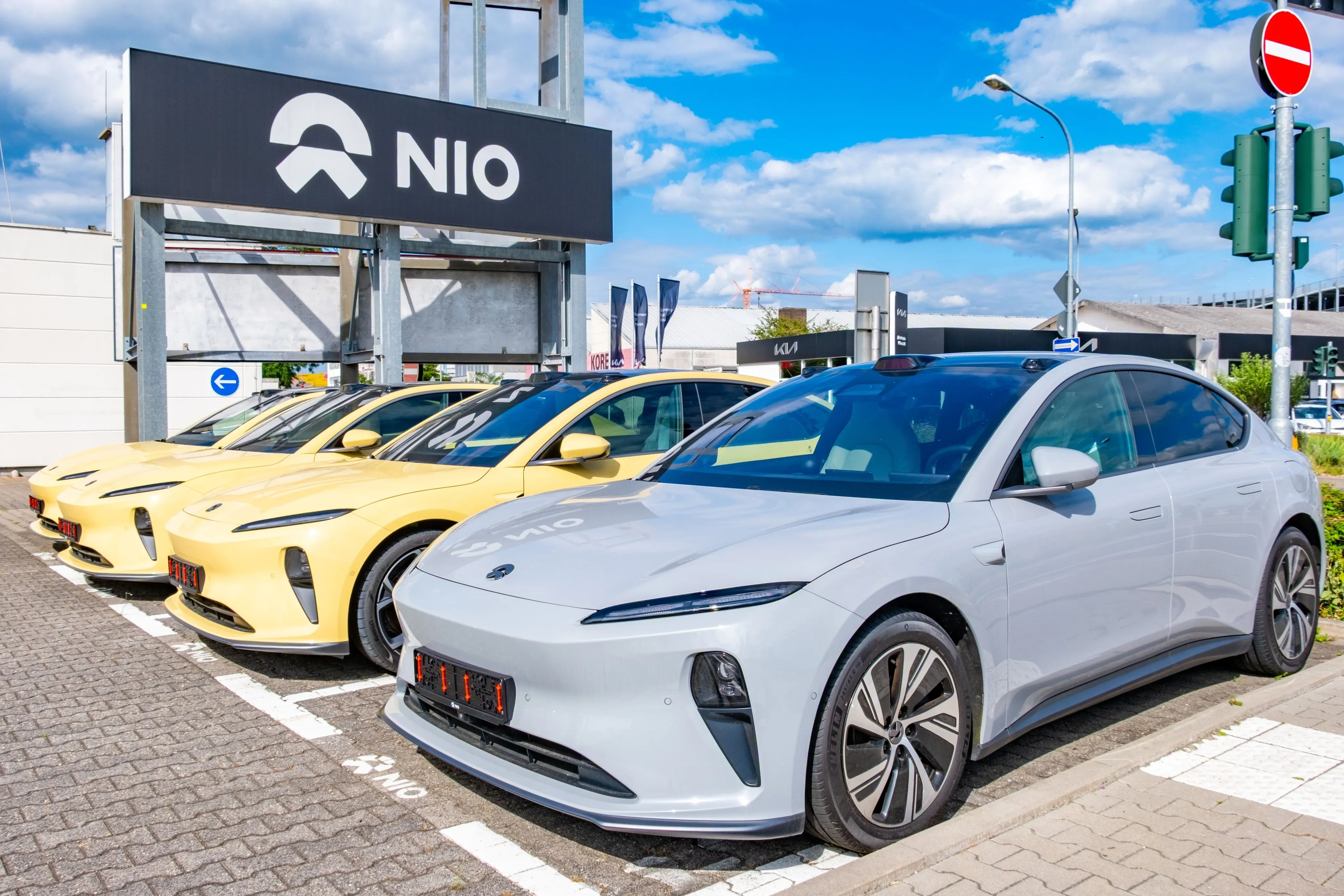
NIO’s US-listed shares retreated sharply on Tuesday as investors weighed an institutional stake reduction against the electric-vehicle maker’s improving delivery momentum.
The American depositary receipts closed 4.15% lower at $4.62 on August 11, underperforming the Nasdaq Composite’s 0.60% decline. The selloff ended NIO’s two-day winning streak and occurred on volume of approximately 45.3 million shares, well above its 50-day average of 27.3 million. At the closing price, NIO remained more than 42% below its 52-week high of $8.02, reached in October.
The immediate pressure followed disclosure that BlackRock reduced its NIO holdings by approximately 12% during the second quarter. The asset manager reportedly sold about 1.2 million shares, leaving it with roughly 9.5 million shares valued at $47.9 million as of June 30.
The timing requires context. Regulatory ownership reports provide a delayed snapshot, meaning the filing does not reveal BlackRock’s current position or prove that the firm sold shares during Tuesday’s session. Nevertheless, the reduction attracted attention because BlackRock had increased its exposure to NIO during the two previous quarters.
The same filing reportedly showed reduced exposure to XPeng alongside increased positions in US-based EV companies Lucid and Rivian. Traders interpreted the changes as a possible rotation away from selected Chinese EV stocks, although one quarterly filing is insufficient to establish a broader institutional trend.
The ownership headline overshadowed NIO’s improving operating performance. The company delivered 35,934 vehicles in July, representing a 71% year-over-year increase. Deliveries comprised 20,008 vehicles from the premium NIO brand, 10,155 from the family-oriented ONVO brand and 5,771 from FIREFLY.
Through the first seven months of 2026, deliveries reached 227,057 vehicles, up 68% from the same period last year. Cumulative deliveries across NIO’s three brands stood at 1,224,649 at the end of July.
July deliveries were approximately 11.5% lower than June’s 40,597 vehicles, however. The decline suggests investors should distinguish between strong annual growth and short-term sequential momentum.
NIO delivered 107,658 vehicles during the second quarter, an increase of 49.4% year over year. That provides a stronger production base entering the second half, but the company must sustain monthly volumes while improving margins and limiting operating expenses.
Demand for the flagship ES9 remains one of the company’s strongest selling points. NIO delivered its 20,000th ES9 on August 8, only 73 days after customer handovers began.
The model reached its first 10,000 deliveries within 30 days. The next 10,000 units were delivered over approximately six weeks, demonstrating continued demand in China’s premium battery-electric segment above RMB500,000.
The company is also expanding the ES8 lineup. Cumulative deliveries of the latest-generation ES8 surpassed 130,000 in July, while deliveries of a five-seat version began on July 10. Together, the ES8 and ES9 are central to NIO’s strategy of using higher-priced vehicles to support stronger gross margins.
Goldman Sachs recently upgraded NIO to Buy and raised its price target to $7, arguing that demand for the ES8 and ES9 could drive a turnaround in profitability and free cash flow. Those projections remain analyst estimates rather than company guidance.
NIO’s delivery growth is occurring against a difficult industry backdrop. Retail passenger-vehicle sales in China fell 20.9% year over year and 8.8% month over month in July, reaching approximately 1.46 million units.
New-energy vehicles captured a record 65.1% share of the market, but their retail sales still declined 3.9% from a year earlier to 951,000 units. Weak consumer confidence, seasonal factors and purchases brought forward by earlier promotions contributed to the slowdown.
For NIO, the central question is whether rapid growth across the NIO, ONVO and FIREFLY brands can translate into durable profitability despite intense competition and weaker industry demand. The company has not formally confirmed its next earnings release date, leaving August deliveries and any subsequent financial-results announcement as the next major catalysts for NIO stock.
Risk Warning: This article is provided for informational purposes only and does not constitute investment advice, investment research, or a recommendation to trade. The views expressed are those of the author and do not necessarily reflect the position of Markets.com. When considering shares, indices, forex (foreign exchange), and commodities for trading and price predictions, remember that trading CFDs involves a significant degree of risk and may not be suitable for all investors. Leveraged products can result in capital loss. Past performance is not indicative of future results. Before trading, ensure you fully understand the risks involved and consider your investment objectives and level of experience. Cryptocurrency CFD trading restrictions may apply depending on jurisdiction.
Latest
View all
Monday, 28 September 2026
6 min

Monday, 28 September 2026
5 min

Monday, 28 September 2026
5 min


 EN
EN





