
Access Restricted for EU Residents
You are attempting to access a website operated by an entity not regulated in the EU. Products and services on this website do not comply with EU laws or ESMA investor-protection standards.
As an EU resident, you cannot proceed to the offshore website.
Please continue on the EU-regulated website to ensure full regulatory protection.
Friday Aug 7 2026 08:36

35 min

Forex prices respond to interest rates, inflation, economic data, political developments and changing market sentiment. Without a structured method, traders can easily make inconsistent decisions based on short-term price movements or emotion. Forex trading strategies provide rules for selecting currency pairs, identifying entry opportunities, controlling risk and deciding when a position should be closed.
This guide explains eight popular strategies and compares forex day trading strategies with forex swing trading strategies to help beginners find an appropriate starting point.
A forex trading strategy is a set of rules for buying or selling currency pairs. It should explain what conditions must be present before a trade can be opened, how much capital may be exposed and what would cause the position to be closed.
A complete strategy normally defines:
A strategy is different from an individual trading signal. A signal identifies a possible opportunity at a particular moment, while a strategy determines whether that signal fits a repeatable process.
It is also different from a complete trading plan. The trading plan covers broader considerations such as daily loss limits, trading hours, performance reviews and emotional discipline. The strategy sits inside that plan and governs individual positions.
The purpose is not to predict every market movement. It is to create a process that can be followed, recorded and evaluated. A simple strategy can still produce losses, while adding more indicators does not automatically make a strategy more reliable.
Trading style describes how frequently a trader operates and how long positions remain open. Scalping, day trading, swing trading and position trading can all use trend, range, breakout or momentum signals.
Trading Style | Typical Holding Period | Time Commitment | Cost Considerations | Generally Suited To |
|---|---|---|---|---|
Scalping | Seconds to minutes | Very high | Frequent spreads and possible slippage | Highly active, experienced traders |
Day trading | Minutes to hours | High | Multiple spreads during each session | Traders available during market hours |
Swing trading | Several days to weeks | Moderate | Overnight financing may apply | Patient or part-time traders |
Position trading | Weeks to months | Lower daily commitment | Longer-term financing and rollover costs | Traders focused on macro trends |
Scalping aims to capture very small price movements through frequent trades. Because transaction costs represent a larger portion of each target, it is rarely the easiest starting point for beginners.
Day traders close their positions before the trading session ends, avoiding overnight exposure but requiring regular market monitoring. Swing traders accept overnight risk in exchange for fewer decisions and the possibility of capturing larger movements. Position traders focus on longer-term themes such as interest-rate cycles and economic growth.
The most appropriate style is one a trader can follow consistently. A strategy that requires continuous monitoring will be difficult to execute for someone who can only review the market once or twice a day.
No single approach is best in every market. Trend strategies may struggle when prices move sideways, while range strategies can fail when volatility produces a genuine breakout.
Forex Strategy | Suitable Market Condition | Common Timeframe | Complexity | Main Risk |
|---|---|---|---|---|
Trend following | Directional market | 1-hour to daily | Low–Medium | Entering near the end of a trend |
Range trading | Sideways market | 15-minute to daily | Low–Medium | Sudden breakout |
Breakout trading | Rising volatility | 15-minute to daily | Medium | False breakout |
Price action | Various conditions | 1-hour to daily | Medium | Subjective interpretation |
Moving average crossover | Established trend | 1-hour to daily | Low–Medium | Delayed signals |
Momentum trading | Strong price movement | 15-minute to daily | Medium | Rapid reversal |
News trading | Major economic releases | Minutes to hours | High | Slippage and spread expansion |
Carry trading | Stable interest-rate environment | Daily to monthly | Medium–High | Adverse exchange-rate movement |

Trend following attempts to trade in the direction of an established market movement. An uptrend is typically characterised by higher highs and higher lows, while a downtrend contains lower highs and lower lows.
Traders may use trendlines, moving averages or price structure to identify direction. Instead of entering after a sudden price surge, they may wait for a pullback and confirmation that the original trend is resuming. The main weakness is that trend indicators can generate repeated false signals when the market becomes range-bound.

Range trading is used when a currency pair repeatedly moves between identifiable support and resistance levels. Traders monitor the lower boundary for potential buying opportunities and the upper boundary for possible selling opportunities.
Oscillators such as the Relative Strength Index can help show when momentum is becoming stretched, but they should not be treated as independent trading instructions. The greatest risk is a genuine breakout: a trade based on the old range can quickly move into a loss when new information changes market direction.

A breakout occurs when price moves beyond an established support level, resistance level, trendline or consolidation area. Breakout traders attempt to participate when that move develops into a new directional trend.
Some traders enter when price closes outside the boundary, while others wait for price to retest the broken level. Waiting for confirmation may filter some false signals, but it can also produce a later entry. A brief move outside the range followed by a fast reversal is known as a false breakout.

Price action trading uses market structure, candlesticks and important price levels rather than relying on a large collection of indicators. Traders may look for pin bars, engulfing candles or failed breakouts near support and resistance.
The approach keeps charts relatively simple, but it can become subjective. Two traders may interpret the same pattern differently. Candlestick formations should therefore be considered within the wider trend and market environment rather than used in isolation.
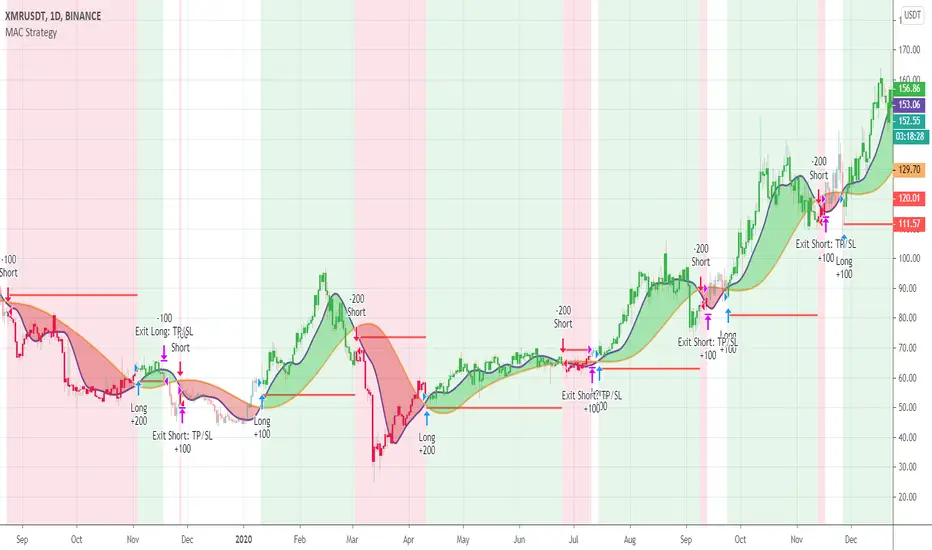
A moving average crossover uses two averages calculated over different periods. A faster average crossing above a slower average may indicate improving upward momentum, while a cross below can suggest weakening price action.
Common combinations include 20- and 50-period averages for shorter trends or 50- and 200-period averages for longer-term analysis. These settings are not universally optimal. Moving averages use historical prices, so signals may arrive after a large part of the movement has occurred. Sideways markets can also produce frequent, unproductive crossovers.

Momentum trading focuses on the speed and strength of a price movement. Indicators such as RSI, MACD and the momentum oscillator can help traders evaluate whether buying or selling pressure is increasing.
Strong momentum can support continuation, but it may also signal that a trade is becoming overcrowded. Divergence—when price and an indicator move in different directions—can warn that momentum is weakening, although it does not guarantee a reversal. Every momentum trade still needs a defined invalidation level.
News trading targets volatility surrounding interest-rate decisions, inflation reports, employment data and other major economic releases. Traders may attempt to predict the result or wait until the announcement produces a clearer market direction.
Prices can move rapidly during these events. Spreads may widen, orders can experience slippage and a standard stop-loss may be filled at a different price from the requested level. Although news trading is sometimes included among forex day trading strategies, its execution risks make it less suitable as a beginner’s first approach.
Carry trading involves buying a currency with a relatively high interest rate while selling one with a lower rate. Depending on the currency pair, position direction and platform conditions, the trader may receive or pay an overnight financing adjustment.
A positive interest-rate difference does not make the trade automatically profitable. If the purchased currency depreciates, the exchange-rate loss may exceed any financing benefit. Carry trades are also vulnerable when central-bank expectations change or investors suddenly move away from riskier currencies.
Looking for a forex trading platform? Join Markets.com to access forex CFDs across major, minor, and exotic currency pairs. Eligible new clients can also claim up to $5,000 in bonuses through the ongoing rewards program after completing the qualifying steps.

Forex day trading involves opening and closing positions within the same trading day. It is a holding style rather than one specific entry method: day traders can use breakouts, momentum, trend following or range trading.
A basic intraday workflow could involve:
Illustrative example: EUR/USD intraday breakout
Suppose EUR/USD consolidates below resistance before the London–New York session overlap. A trader waits for a candle to close above the range and enters only if the breakout meets the strategy’s confirmation rules. The trade becomes invalid if price closes back inside the range. The exit could be a predefined target or the end of the trading session.
This example explains how a strategy can be structured; it is not a current trading signal.
Day trading avoids leaving positions exposed overnight, but it creates different challenges. Frequent spreads can reduce returns, volatile markets may produce slippage and constant chart monitoring can encourage overtrading. Using high leverage to pursue small intraday movements can also magnify losses.
Forex swing trading strategies aim to capture movements lasting several days or weeks. They may suit traders who cannot monitor charts throughout each market session, although positions remain exposed to overnight and weekend events.
Three common approaches are:
Swing traders generally place fewer trades than day traders and may avoid some short-term market noise. However, their stop-loss distances are often wider, so position size may need to be smaller. Overnight financing, weekend gaps and unexpected political or economic developments should also be considered.
>> Read more: Best Forex Brokers with Welcome Bonuses in 2026
Finding an entry signal is only one part of strategy development. The rules must also explain how risk will be controlled and how performance will be evaluated.
Step 1: Define the market and timeframe
Choose the currency pairs, chart periods and trading sessions to be tested. Constantly changing instruments makes it harder to determine whether results come from the strategy or different market behaviour.
Step 2: Write objective entry and exit rules
Avoid vague instructions such as “buy when the chart looks bullish.” Define the market structure, indicator reading or candle close required for entry, as well as the condition that invalidates the idea.
Step 3: Calculate the risk before entering
Decide where the stop-loss belongs based on market structure. Position size can then be adjusted so that reaching the stop does not create an unacceptable account loss.
Step 4: Backtest the strategy
Apply the same rules to historical data and record the number of trades, win rate, average gain, average loss, maximum drawdown and trading costs. Testing should cover trending, ranging and volatile conditions.
Step 5: Forward-test with a demo account
A demo account allows the strategy to be tested against current price movements without exposing real capital. However, simulated results may differ from live trading because emotions and execution conditions are not identical.
Step 6: Review the trading journal
Record the setup, entry, exit, position size, market conditions and whether every rule was followed. A losing trade that followed the plan can be more useful than a profitable trade based on an impulsive decision.
Risk-Control Element | Question to Answer Before Trading |
|---|---|
Position size | How much could be lost if the stop is reached? |
Stop-loss | At what price is the original idea invalidated? |
Profit target | Is the potential reward reasonable relative to the risk? |
Leverage | How much total market exposure does the trade create? |
Correlation | Are several positions exposed to the same currency? |
Economic calendar | Is an important announcement approaching? |
Win rate alone does not determine whether a strategy has worked. A useful calculation is:
Expectancy = (Win Rate × Average Win) − (Loss Rate × Average Loss)
For example, a strategy with a 45% win rate, an average winning result of $150 and an average losing result of $100 has an expectancy of:
(0.45 × $150) − (0.55 × $100) = $12.50 per trade
This simplified example excludes spreads, slippage and financing costs. Positive historical expectancy does not guarantee that the strategy will remain profitable under future conditions.
Beginners should be especially cautious about martingale systems that increase position size after losses. A prolonged losing sequence can cause exposure to rise rapidly and potentially exhaust the account.
Markets.com is an online multi-asset CFD platform providing access to major, minor and exotic currency pairs alongside shares, indices, commodities and other markets. The platform includes charting, technical indicators, trading calculators and risk-management tools. Product availability and trading conditions vary by country and regulatory entity.
Forex CFDs allow traders to speculate on rising or falling currency pairs without taking delivery of the underlying currencies. They are leveraged products, so both potential profits and losses are calculated using the full position rather than only the margin deposited.
Step 1: Open and verify your account
Create a Markets.com account and complete the identity and eligibility checks required in your jurisdiction.

Step 2: Select a demo or live environment
Beginners can use a demo account to explore the platform and practise strategy rules with virtual funds before deciding whether to trade with real capital.
Step 3: Choose a currency pair
Start with a familiar pair and review its spread, trading hours and upcoming economic events.

Step 4: Apply the strategy
Use the chart and available indicators to identify a setup that meets the written entry rules. Avoid opening a trade simply because price is moving quickly.
Step 5: Define the position and risk controls
Choose the direction and position size, then consider setting stop-loss and take-profit levels. Review the margin requirement, spread and possible overnight financing before confirming the order.
Step 6: Record and review the result
Add the completed position to a trading journal and evaluate both the outcome and the quality of execution.
Explore forex CFDs on Markets.com and practise applying a structured method with the platform’s charting and risk-management tools.
Trading CFDs involves a significant risk of loss. Leverage can magnify adverse price movements, and stop-loss orders may not always execute at the requested level during fast or gapping markets.
Claim up to $5,000 in bonuses and start trading forex CFDs with Markets.com today. Open your account, complete the qualifying steps, and explore global forex markets on one powerful trading platform.

There is no single forex trading strategy that works for every trader or market environment. Trend following, range trading and breakout trading may provide accessible starting points because their basic rules can be clearly defined. Forex day trading strategies suit traders who can monitor the market frequently, while swing trading may better fit those seeking fewer decisions and longer holding periods. Whichever approach is selected, beginners should consider trading costs, leverage and risk before testing it with real capital. Consistency, record-keeping and controlled exposure matter more than finding a supposedly perfect strategy.
>> Read more: What Is Forex Trading and How Does It Work?
There is no fixed number. Traders can combine different timeframes, indicators, price patterns and risk rules to produce numerous variations. Most methods fall into broader categories such as trend, range, breakout, momentum, news, price action and carry trading.
The best strategy depends on current market conditions and the trader’s schedule, risk tolerance and experience. Trend methods may suit directional markets, while range strategies are designed for sideways conditions. No strategy performs best all the time.
Trend following and support-and-resistance trading are relatively easy to understand because their market conditions and invalidation levels can be defined visually. However, easy to understand does not mean low-risk or consistently profitable.
Day trading avoids overnight exposure but requires more screen time and may generate higher transaction costs. Swing trading involves fewer decisions but introduces overnight risk and financing charges. The better choice depends on the trader’s availability and tolerance for holding positions.
No. Economic surprises, changing volatility, slippage, trading costs and execution errors can all create losses. Backtesting may show how rules performed historically, but it cannot guarantee future results.
Testing should cover a meaningful number of trades and different market environments rather than an arbitrary number of days. The sample should include trending, ranging and volatile periods, with realistic estimates for spreads, slippage and financing costs.
Risk Warning: This article is provided for informational purposes only and does not constitute investment advice, investment research, or a recommendation to trade. The views expressed are those of the author and do not necessarily reflect the position of Markets.com. When considering shares, indices, forex (foreign exchange), and commodities for trading and price predictions, remember that trading CFDs involves a significant degree of risk and may not be suitable for all investors. Leveraged products can result in capital loss. Past performance is not indicative of future results. Before trading, ensure you fully understand the risks involved and consider your investment objectives and level of experience. Cryptocurrency CFD trading restrictions may apply depending on jurisdiction.
Latest
View all
Sunday, 20 September 2026
35 min

Sunday, 20 September 2026
31 min

Sunday, 20 September 2026
29 min


 EN
EN





